Kategorie: Project Report

  • ASEA-UNINET Annual Report 2019 is available now!

    We proudly present the ASEA-UNINET Annual Report 2019 which gives insights into the great variety of fruitful and successful joint activities within the ASEA-UNINET.

    The ASEA-UNINET Annual Report 2019 is available here:

    ASEA-UNINET Annual Report 2019

    And it can also be found on our website, in the Meetings and Reports section.

    In his preface, Prof. Dr. A Min Tjoa, who has terminated his 5 year period as Austrian National Coordinator in December 2019, invites you to to get an impression of the outstanding work of scholars and scientists from the ASEA-UNINET member universities in Austria and in the Asian member countries:


    Preface by Prof. Dr. A Min Tjoa

    I am pleased to introduce this Annual Report because it reflects a very successful year of cooperation between the academic institutions of our network in staff/student mobility, teaching and research activities. The reporting year 2019 once more shows the impressive commitment of our universities to enhance joint academic activities between Austrian universities and our ASEAN counterparts. As one of the participants of the 1st Meeting of ASEA-UNINET in Ho Chi Minh City in 1994 I can state that this report perfectly reflects one of its founding ideas to serve as a forum and network of excellence providing expertise and initiatives for deepening European – South East Asian academic relations.
    One original intend expressed at the first meetings was to assist in forming coalitions of resources for academic activities between member institutions. This year’s report convincingly demonstrates by the many joint research projects the success of these original ideas expressed in the nineties. The numerous joint publications in quality journals and leading international conference proceedings as results of the projects are proof of this.

    Different manifestations of academic cooperation within the framework of Erasmus or ASEM and the organization of Summer schools are pieces of evidence for the realization of the initial goals set in 1994.
    Another important aspect from the very beginning was the development of curricula and joint-curricula as a main driver for human capacity building. The cooperation efforts within ASEA-UNINET to develop a curriculum for a master study “Restoration of Art and Architecture” in Indonesia together with Austrian partners can be considered as a showcase and role model in this area.

    Particularly noteworthy is the role of ASEA-UNINET for a successful meritocracy-based selection in the awarding of Ernst Mach scholarships by the Austrian Federal Government. These scholarships finance a considerable number of doctoral scholarships and research stays. The same scheme holds for the selection of scholarships for Pakistan together with the Higher Education Commission Pakistan.

    In my function as ASEA-UNINET Coordinator for Technology, Innovation and Sustainability Projects for Europe I am extremely satisfied that, collaboration in sustainable development plays a central role for a large percentage of the submitted projects in 2019. It is worth mentioning that a majority of the basic research projects are also envisioning applications for future innovations to serve the SDGs (e.g. advanced battery research). One could even go further and postulate that in a broader sense all our projects have an SDG-facet. I would very much encourage that all our scientists who are active within ASEA-UNINET projects should spend some time in elaborating the embedding of their work as a contribution to the SDGs.

    The comprehensive nature of ASEA-UNINET to include Humanities and Arts in its agenda from the very beginning is again a very important contribution to the SDGs as stated in the UNESCO Hangzhou Declaration “Placing Culture at the Heart of Sustainable Development Policies”.  In this year’s report, we can find significant contributions in the area of Humanities and Arts where we often observe a fruitful interdisciplinary collaboration with technical disciplines.

    With December 2019 I have terminated my 5 years period as Austrian National Coordinator of ASEA-UNINET.

    I want to thank all supporters of our network for the successful academic cooperation in the past years. In the first place, I have to mention the continuous support of the Federal Ministry of Education, Science and Research. Our special thanks go to those personalities of this Ministry and the OeAD, who have been enduringly committed to the goals of ASEA-UNINET. I would like to cordially thank all members of the Austrian ASEA-UNINET board (“Kuratorium”) for their initiatives, hard work, commitment and excellent cooperation.

    It is now the right time and place to thank OeAD  (Austrian Agency for International Mobility and Cooperation In Education, Science and Research) and its staff members who are assigned to support and facilitate the administration of  ASEA-UNINET for its enduring and wholehearted support in the five years of my work as national coordinator. In the first place, I have to thank Barbara Karahan for her excellent support and total identification with ASEA-UNINET’s work, aims and ideals.

    Looking to the future, I am very much convinced that my friend and colleague Gabriele Kotsis as Austrian National Coordinator will pilot us towards a very bright future of the network in the coming years.

    Finally, I encourage you to read this Annual Report and appreciate the outstanding progress that was made during 2019.

  • Indonesian Summer School on Music Information Retrieval

    14 – 18 August 2017 – Universitas Indonesia, Depok (Jakarta, Indonesia) –
    http://ir.cs.ui.ac.id/mir-summer-school/index.php

    The Indonesian Summer School was the first summer school in Music Information Retrieval in Indonesia. The summer school covered basic knowledge in Information Retrieval, music content analysis, content based music indexing, music classification, automatic feature learning, user studies, and music recommendation. The summer school program also included some Lab sessions.
    The summer school was intended for 4th year undergraduate students, master and PhD students, researchers in institutions and industry. It was intended to give the participants some backgrounds to work on music information retrieval.
    The Summer School was organized by Universitas Indonesia, Vienna University of Technology (TU Wien, Austria) and Johannes Kepler University (Linz, Austria) and was supported by the ASEA-UNINET.

    Among the lecturers from the respective organizing universities four came from Austria and two from the Universitas Indonesia:
    – Bruce Ferwerda: Assistant Professor in the Computer Science and Informatics department of the School of Engineering at Jönköping University, Sweden and currently also a researcher in the Department of Computational Perception at the Johannes Kepler University in Linz, Austria. He received his master’s degree in Human-Technology Interaction from Eindhoven University of Technology in the Netherlands and received his PhD degree in Technical Sciences from the Johannes Kepler University in Austria.
    – Markus Schedl: Associate Professor at the Johannes Kepler University Linz / Department of Computational Perception. He graduated in Computer Science from the Vienna University of Technology and earned his Ph.D. in Computer Science from the Johannes Kepler University Linz.
    – Mirna Adriani: Currently she is the head of the Information Retrieval Lab in the Faculty of Computer Science, Universitas Indonesia. Her PhD in Computer Science she received from the Glasgow University in Scotland UK.
    – Peter Knees: Assistant Professor of the Faculty of Informatics, Institute of Software Technology and Interactive Systems of the Vienna University of Technology. He holds a Master’s degree in Computer Science from the Vienna University of Technology and a Ph.D. degree from the Johannes Kepler University Linz.
    – Thomas Lidy: Currently he is the Head of Machine Learning at Musimap, a startup providing a large-scale human+AI based music recommender and search engine. He has a long-standing experience in audio analysis and Music Information Retrieval, which he has gathered in more than 12 years of working in this domain as a researcher at the Vienna University of Technology in an international context. In 2008, Thomas had founded Spectralmind, an innovative music technology company that created both professional music search products and mobile apps for visual music discovery. His master degree in Informatics he received from the Vienna University of Technology.
    – Yohanes Stefanus: Lektor Kepala (Associate Professor) at the Faculty of Computer Science, Universitas Indonesia. His research expertise is in Computer-Aided Geometric Design, Wavelet-Transform-based Techniques, and Computational Logic. He also works on Machine Learning and Symbolic Computation. He holds a M.Math. degree and a Ph.D. degree in Computer Science from the University of Waterloo, Canada.


    Professors and researchers from ASEA UNINET have been invited to participate, together with their students, in this summer school via live video lecturing.
    Links for the video streaming via Youtube, 14 – 18 August 2017, have been the following:

    Day 1 – August 14: https://youtu.be/FlXC7ERXGZU
    Day 2 – August 15: https://youtu.be/pItzrAsCM9s
    Day 3 – August 16: https://www.youtube.com/watch?v=QoYzj-JaVrw
    Day 4 – August 18: https://www.youtube.com/watch?v=t414HMiuu0I

    In total there were 50 participants from different Indonesian universities as well as audience which followed the sessions via the live streaming on Youtube from Myanmar, Malaysia and Austria.


    The program for the summer school was structured in the following way:
    • Monday, 14 August 2017
      09.00 – 10.30     Intro to MIR (Knees)
      10.45 – 12.15     Music content analysis (Knees)
      13.30 – 15.00     Basics in information retrieval and machine learning (Adriani)
      15.30 – 16.00     Introduction to Labs (Knees, Lidy)
    • Tuesday, 15 August 2017
      09.00 – 10.30     Music content similarity, genre/mood classification (Schedl)
      10.45 – 12.15     Hiding and Retrieving Information in Music using Wavelet Transform (Stefanus)
      13.30 – 15.00     Lab: music content similarity, genre/mood classification (Knees, Lidy)
    • Wednesday, 16 August 2017
      09.00 – 10.30     Deep learning / automatic feature learning (Lidy)
      10.45 – 12.15     Lab: deep learning / automatic feature learning (Lidy)
      13.30 – 15.00     Music context-based similarity and indexing
    • Thursday, 17 August 2017
      No classes due to Independence Day
    • Friday, 18 August 2017
      09.00 – 10.30     Lab: music context-based similarity and indexing (Schedl)
      10.45 – 11.30     Designing for users 1 (Ferwerda)
      13.30 – 15.00     Designing for users 2 (Ferwerda)

    The campus of Universitas Indonesia offered a beautiful environment to study and was appreciated by the participants.


  • Yogyahealth – a report on the Bernd Rode Award winning project 2016

    Yogyahealth is an outstanding ASEA-UNINET collaboration project between European and South-East Asian partners, which was awarded the Bernd Rode Award 2016 and furthermore honoured by a certificate of gratitude by the Universitas Gadjah Mada in 2016. The project was founded in the year 2008 by Matthias Lechner, MD, PhD, and an Indonesian colleagues and supported by Univ.-Prof. Bernd Rode, Univ.-Prof. Erich Schmutzhard and Univ.-Prof. Walter Kofler and the Indonesian leadership team, incl. Prof. Mo Hakimi, Prof. Ova Emilia, Prof. Bing Tan, Dr. Sagung Indrasari, et al. The collaboration was founded and continuously developed by financial means of ASEA-UNINET.

    Meanwhile the project comprises three different parts: (i) the „Yogyakarta Head and Neck Cancer Prevention and Early Detection Programme“ (www.yogyahealth.org/ent), specifically addressing the prevention and early diagnosis of cancer in the field of ENT, (ii) the „Yogyakarta Public Health Promotion Link“ (www.yogyahealth.org/publichealth), focusing on the Smoking Awareness und Smoking Prevention Programme and (iii) the „Yogyakarta Women’s Health Initiative“ (http://www.yogyahealth.org/womenshealth), which specialises in screening and early detection of cervical cancer in Yogyakarta province. This also includes an online portal for physicians and patients with validated patient information leaflets in the local language.

    Advances in the ENT-screening programme: the handover of new equipment by Dr. Lechner to the Wonosari District Hospital (Picture 1) and…

    …to the Banyumas District Hospital (Picture 2)

    Dr. Lechner’s recent work focused on the establishment of a screening programme for nasopharyngeal cancer which is endemic to South-East Asia. Without an endoscopic examination of the nasopharynx early-stage cancer is frequently missed and, hence, patients in rural and poor regions around Yogyakarta often present with cancer at an advanced stage at the time of diagnosis. Generous donations by the companies Olympus, Medtronic and Tristel in 2015 and a very generous donation by the company Storz in 2016 helped to equip ENT-medics in two different hospitals with special medical equipment that allowed a thorough examination of patients by endoscopic means and the ability to obtain a biopsy sample under direct vision. This will lead to a significant reduction of negative biopsies in cancerous cases. As the equipment is now located in two peripheral hospitals, patients who either are not referred or do not have the financial means to travel to Yogyakarta can be examined using an endoscopic system locally. According to data from the Dr Sardjito Hospital in Yogyakarta, 50% of all head and neck cancers can be ascribed to nasopharyngeal cancer.

    Equipment (Picture 3) at the Wonowasiri District Hospital prior to the kind donations

    Examination of a patient (Picture 4) at the Wonosari District Hospital prior to the kind donations

    In March 2016 Dr. Lechner started preparatory work for a further research collaboration on screening for nasopharyngeal cancer and visited peripheral hospitals with the prupose of educating doctors together with the Yoyakarta team. This stay in Indonesia then coincided with the 15th ASEA-UNINET plenary meeting, where Dr. Lechner was awarded the Bernd Rode Award 2016. The financial means associated with the award were used for visiting Indonesia once again in August 2016, together with Mrs Cindy Teh and Mr Cepi Maryadi as well as other co-workers from the company Storz, where the new equipment was handed over to the medical teams in peripheral hospitals. Dr. Ima and her team in the Wonosari District Hospital received endoscopes and a brand-new LED system with instructions and training by Dr. Lechner. The second system was given to Dr. Mugi and his team at Banyumas District Hospital.

    Training at the Wonosari District Hospital (Picture 5)

    Training at the Banyumas District Hospital (Picture 6)

    In a ceremony of thanks at Gadjah Mada University Dr. Lechner was handed over a certificate by the Dean of the faculty, to express the gratitude to ASEA-UNINET and the project team. In the future a smartphone application for data collection and for raising public awareness of symptoms and early signs of nasopharyngeal carcinoma shall be developed and potentially expanded to other programmes. Furthermore, a project on tracheostomy care has already been conducted under Dr. Lechner’s supervision, showing improvement of quality of patient care after the donation of tracheostomy care equipment.

    Picture 7: Dr. Lechner is awarded a certificate of gratitutude by the Dean of Faculty of Medicine at the Universitas Gadjah Mada

  • Austrian-Vietnamese ASEA-UNINET Days 2016 – a review

    Austrian-Vietnamese ASEA-UNINET Days 2016 – a review

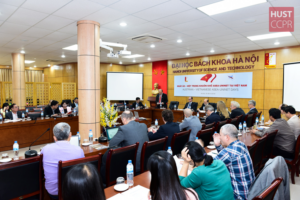
    In the period of 5-9 December 2016 in Vietnam, ASEA-UNINET held in collaboration with the Austrian Embassy the “Austrian – Vietnamese ASEA-UNINET Days in Vietnam” as one of the commemorative activities towards the 45th Anniversary of the establishment of Austrian – Vietnamese diplomatic relations. The event started from 5-6 December, 2016 at Hanoi University of Science and Technology (HUST) campus in Hanoi, continued at University of Danang in Da Nang (7 December, 2016) and finished at University of Medicine and Pharmacy, Ho Chi Minh City in Ho Chi Minh City (8-9 December, 2016). A delegation of Austrian University Professors in the areas of Informatics, Food Science and Biotechnology, Medicine, Economics, Geology and Music travelled to Vietnam to meet interested researchers.

    The main objective of the “Austrian – Vietnamese ASEA-UNINET Days in Vietnam” is to promote the research collaboration among Vietnamese and Austrian universities and disseminating ASEA-UNINET grants including sandwich grants, PhD grants, Postdoc and short-term research grants to young university staffs in Vietnam. According to the Austrian ambassador to Vietnam, H.E. Dr. Thomas Loidl, the Austrian – Vietnamese Diplomatic Relation which was established in 1972 is excellent and based on mutual trust and friendship: “An important objective for the Austrian Embassy in Hanoi is to strengthen the relations between Vietnam and Austria in all sectors, not only in the political and economic field but also in the important sectors of science, research, technology and education” – he said and highly appreciated the contributions of ASEA-UNINET as well as the initiative of the „Austrian – Vietnamese Asea-Uninet Days in Vietnam“.

    austrian-vietnamese asea-uninetdays

    Further information is provided by reports on the webpage of Hanoi University of Science and Technology (HUST) – either in English: http://htqt.hust.edu.vn/en/news-event/570-ao-viet-nam-tang-cuong-hop-tac-trong-giao-duc-va-nghien-cuu.html or in Vietnamese: http://www.hust.edu.vn/tin-tuc/-/asset_publisher/AKFI5qRls1e8/content/ao-viet-tang-cuong-hop-tac-trong-giao-duc-va-nghien-c-1

    by a news post at the website of the University of Danang – in Vietnamese: http://www.udn.vn/posts/view/2753/78

    and by a report on the webpage of the University of Medicine and Pharmacy, Ho Chi Minh City – in Vietnamese: http://www.yds.edu.vn/yds2/?Content=ChiTietTin&idTin=21113&menu=


  • Researchers of an ASEA-UNINET supported project win first Science Slam at the CHNT 21, 16-18 November 2016, Vienna

    Researchers of an ASEA-UNINET supported project win first Science Slam at the CHNT 21, 16-18 November 2016, Vienna

    Every year the Conference on Cultural Heritage and New Technologies (CHNT) is taking place in the city hall of Vienna, every time focusing on a different topic. The 21st CHNT, this year’s programme, dealt with Urban Archeology and Data. It was held between November 16-18, 2016.

    A speciality was the Science Slam which was held for the first time at the CHNT and won by two researchers from the ASEA-UNINET supported Affandi museum project. They enthused the jury with their artistic performance demonstrating their project on the Museum Affandi. We warmly congratulate Doris Grandits and Lukas Stampfer to their great performance!

    science-slam-winners
    Science slam winners Doris Grandit and Lukas Stampfer (http://baugeschichte.tuwien.ac.at/website/sieg-beim-ersten-science-slam-der-chnt/)

    ASEA-UNINET proudly announces the award won by a collaboration project between two departments of the Vienna University of Technology (Ulrike Herbig, Gudrun Styhler-Aydin, Doris Grandits, Lukas Stampfer from the Institute of History of Art, Building Archeology and Restoration together with Ulrich Pont from the Department of Building Physics and Building Ecology), the Danube University Krems (Patricia Engel from the European Research Centre for Book and Paper Conservation-Restoration) and the Universitas Gadjah Mada (Ikaputra,  from the Department of Architecture and Planning, Faculty of Engineering, Yogyakarta). The aim of the project was to develop a concept of restoration and find a way of climate adequate maintenance of the Affandi Museum (Yogyakarta, Indonesia).

    The Affandi Museum Indonesia is a well known place for modern Indonesian art. Unfortunately weather and climatic conditions had a deteriorating effect on the museum’s condition, thereby posing a critical threat to Indonsias’s contemporary cultural heritage. During a stay in Austria Kartika Affandi, Affindi’s daughter, got into contact with Austrian researchers – an initiative dialogue about the comprehensive restoration of the building began.